
FacMet
ALLEN PRODUCTIONLifestyle
0.00.00 Reviews
- Version
- 1.3.0
- Installs
- 10.00K
- Age Rating
- Teen
Screenshots



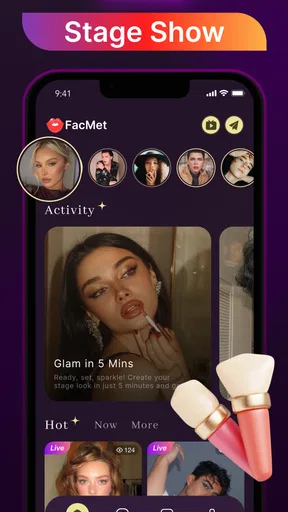
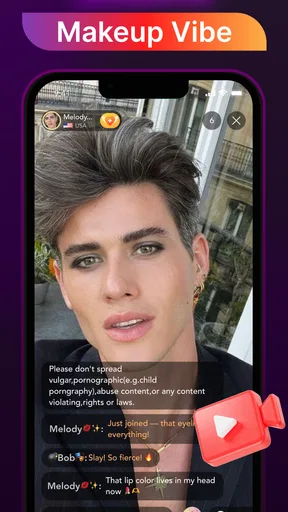
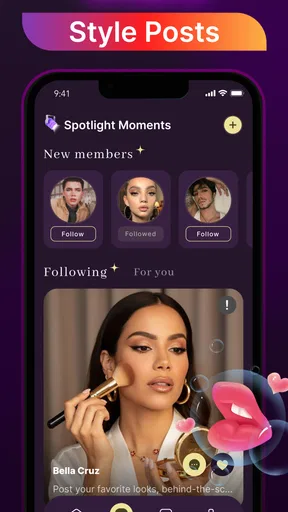
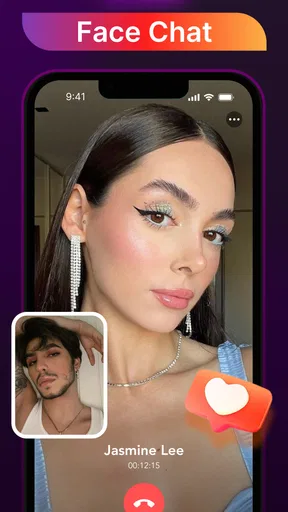
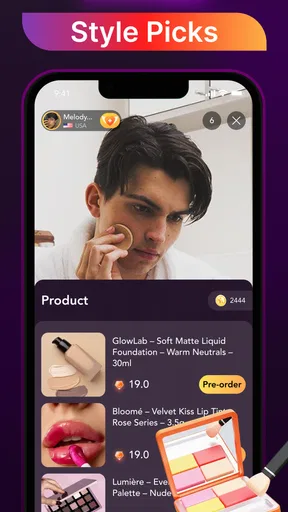
Our Review of FacMet
 Analysis by Appyee
At first glance, FacMet feels like the kind of lifestyle app that invites a quick experiment: a makeup-focused social experience built around chat and calls rather than a traditional beauty guide. I spent time looking at it as an everyday tool, not just something to open once for curiosity, and my impression is mixed in an interesting way. Its appeal comes from the combination of beauty conversation and direct social interaction, while its lasting value depends heavily on whether you actually have people to talk with and a reason to return.
That distinction matters. Many makeup apps are designed around tutorials, product discovery, virtual try-ons, or organized routines. FacMet takes a more conversational route. It is less useful if you want a quiet, structured lesson and more interesting if you want makeup to be the starting point for a social exchange. I would describe it as a lifestyle app for users who enjoy discussing appearance, sharing ideas, and making contact, rather than as a replacement for a dedicated cosmetics reference.
From first-week curiosity to everyday usefulness
The first week is where FacMet has its strongest advantage. A new user can approach it with several simple intentions: talk about a look before going out, exchange opinions about makeup choices, or use a call as a more personal alternative to scrolling through polished posts. The chat-and-call focus makes the experience feel more immediate than a standard feed. Instead of only consuming finished looks, I found myself thinking about the conversation around them: why someone chose a certain style, what might work for a particular occasion, and how personal taste changes the advice.
That immediacy is also what separates it from ordinary social platforms. On a large general-purpose network, makeup content is usually mixed with news, entertainment, advertisements, and unrelated updates. FacMet has a narrower identity, which can be helpful when I want beauty-related interaction without first filtering through an entire social feed. The trade-off is that a narrower community can feel less useful when activity is quiet or when the people available do not share my interests.
I would not install it expecting a complete makeup education. A tutorial platform is normally better for step-by-step instruction, and a shopping app is better for comparing products. FacMet makes more sense when the missing piece is human feedback. For example, before meeting friends, I might use it to discuss whether a look feels too strong for the setting or to ask how another person approaches a similar style. That kind of exchange can be more motivating than reading another generic beauty article.
The first-week test is therefore simple: do I enjoy the social part enough to return after the novelty of a new interface wears off? If the answer is yes, the app has a chance to become a small part of my routine. If I only want information, I will probably find the usual alternatives more efficient. The app’s central idea is not difficult to understand, but it is dependent on participation, and that makes the quality of the experience personal rather than universal.
One practical approach is to give it a specific purpose during the first few sessions. I would not open it aimlessly and wait for entertainment. Instead, I would use it around a real decision: preparing for an event, experimenting with a different look, or wanting a second opinion. This turns chat and calls into a useful workflow rather than a feature I try once and forget. The strongest early habit is to connect the app with a real beauty question, not with empty browsing.
Who is most likely to enjoy it?
FacMet is a good fit for someone who sees makeup as social and expressive. If you like discussing routines, comparing approaches, or getting a reaction from another person, its format may feel more natural than a catalog of products. It may also suit users who find highly edited beauty feeds intimidating, because conversation can make the subject feel more relaxed and less like a performance.
It is less convincing for someone who wants privacy, a fixed learning path, or highly technical recommendations. A person looking for ingredient research, shade databases, professional application lessons, or organized product comparisons should start elsewhere. FacMet can support those interests through conversation, but I would not treat conversation as a substitute for reliable reference material.
The Teen content rating is worth keeping in mind when deciding whether it suits a household. That rating does not tell me how every interaction will feel, so I would still approach calls and chats with ordinary online caution. I would avoid sharing personal information too quickly, keep conversations within my comfort zone, and remember that a beauty-focused setting is still a social environment. Those habits are especially important for younger users.
The difference between a useful call and a forgettable one
Calls can add warmth that text often lacks, but they also ask more from the user. A message can be answered later; a call requires attention at that moment. In my experience, this makes the feature valuable for a planned exchange but less convenient when I only have a minute. I would use a call when visual context and tone matter, and use chat when I need a quick opinion or want time to think before responding.
That distinction creates one of the app’s less obvious trade-offs. The more personal format may produce better conversations, but it also creates a higher maintenance burden than simply saving a tutorial. If I am tired, busy, or not in the mood to interact, the app can feel like an obligation instead of a helpful beauty companion. The best long-term users will probably be those who treat calls as occasional appointments rather than expecting themselves to be available constantly.
What remains after the novelty fades
Month-to-month value is harder to judge than first-week appeal because social apps rely on changing conversations. Makeup itself provides recurring reasons to return: different occasions, changing preferences, seasonal routines, and the desire to try something unfamiliar. But those reasons only become durable if FacMet helps me turn them into repeatable behavior. Opening the app once for a fun conversation is easy. Building a comfortable rhythm around it takes more intention.
I see three possible long-term roles. First, it can be a casual consultation space when I want another person’s reaction. Second, it can be a social outlet for people who already enjoy beauty discussions. Third, it can act as a lightweight motivation tool, encouraging me to experiment rather than repeat the same routine. Of these, the consultation role seems the most practical because it gives each visit a clear purpose without demanding daily use.
That is an important point: FacMet does not need to become a daily app to justify keeping it installed. A tool that I use before an event or when I am stuck with a styling decision can still earn space on my phone. The mistake would be judging it only by how often I open it. Its recurring value is more likely to come from useful moments than from a rigid streak or constant checking habit.
For a realistic everyday scenario, imagine that I have plans after work and want to change my usual look without making a dramatic mistake. I could prepare a short question, show the general direction I am considering during a conversation, and use the response to narrow my choices. The app would not magically solve the decision, but it could reduce the uncertainty that comes from looking at my own face for too long. Afterward, I could return only when another occasion creates a similar need.
A second useful workflow is to keep conversations focused on one decision at a time. Asking for an opinion on an entire routine can create vague replies, while asking whether a particular style fits a specific event is easier to answer. This is not a flashy feature; it is a way of getting more value from the format. Specific questions make FacMet feel more useful than open-ended beauty chatter, especially when I am trying to decide whether the app deserves a regular place in my routine.
How it compares with familiar alternatives
Compared with a tutorial app, FacMet offers more interaction but less structure. Tutorials are better when I want to repeat a technique exactly, pause at a certain step, or follow a planned progression. FacMet is better when my question is subjective: whether a look feels appropriate, how another person interprets a style, or what kind of change might feel comfortable.
Compared with a general social network, it is more focused but potentially less broad. A general platform may offer a larger variety of creators and beauty communities, while FacMet keeps the emphasis on direct chat and calls. I would choose the broader network for passive discovery and FacMet for a more intentional exchange. Neither completely replaces the other.
Compared with a beauty shopping app, FacMet is less transactional. It is not where I would begin if I already know I want to compare prices or find a specific product. Its value is the conversation before the purchase, or even the conversation that helps me decide not to buy anything at all. That makes it more personal, but also less efficient for users who prefer quick, objective shopping decisions.
The app is free to install, which makes experimenting with it fairly easy. There are in-app purchases ranging from under a dollar to amounts approaching a hundred dollars per item, so I would pay attention to any optional spending before making the app part of a regular routine. The presence of purchases changes the long-term calculation: casual use may cost nothing, but frequent engagement can make it important to understand what is optional and what I actually need.
The maintenance burden of staying engaged
The main maintenance issue is not technical complexity; it is social energy. Chat and calls work best when I am willing to participate, respond thoughtfully, and return at a sensible pace. If I install the app without knowing what role it should play, I can easily drift into checking it out of habit rather than using it for a reason. That kind of low-value checking is what makes many lifestyle apps feel exhausting over time.
I would manage that by setting boundaries from the beginning. I might open FacMet only when I have a beauty-related question, reserve calls for times when I can concentrate, and avoid treating every notification as something that needs an immediate response. If the app supports my routine instead of controlling it, it has a better chance of remaining enjoyable. If it starts to feel like another inbox, its central advantage disappears.
There is also a mental maintenance cost in social comparison. Makeup conversations can be encouraging, but they can also make me judge my own appearance too harshly if I focus on polished results or constant improvement. I would use the app as a place to exchange ideas, not as a measure of whether I look good enough. That mindset makes a meaningful difference to whether the experience feels creative or pressuring.
Device compatibility is relatively approachable because the app supports Android versions from 7.0 onward. That makes it accessible to people using older Android phones, although the quality of calls and chats will still depend on the phone’s general condition and connection. I would test the core interaction early rather than assuming that broad operating-system support guarantees a smooth experience on every device.
The current version is 1.3.0, and the developer is ALLEN PRODUCTION. Those details are useful when checking that I am looking at the intended app, especially if several similarly named products appear in a search. The app has passed ten thousand installs, which suggests that it has an initial audience but remains a relatively small community compared with established social platforms. That smaller scale may feel more focused, though it also makes the availability of active conversations more important.
Where fatigue can set in
The first source of fatigue is repetition. If conversations keep circling around the same kinds of looks without introducing a new question, the social format can lose its spark. A user who needs constant novelty may eventually prefer a large content platform with a wider stream of creators and trends. FacMet is more sustainable when I bring my own situations and interests to it instead of expecting it to entertain me indefinitely.
The second is the mismatch between immediacy and availability. A call can be engaging when both people are ready, but inconvenient when schedules do not line up. Chat reduces that pressure, yet it may not provide the same sense of connection. I would not choose this app if I wanted every interaction to be instant and predictable. Its social value naturally includes some waiting and uncertainty.
The third is spending discipline. Because optional purchases can range from $0.99 to $99.99 per item, I would not treat the free entry point as a guarantee that every part of extended use will remain cost-free. I would decide in advance what kind of value I am willing to pay for and avoid buying simply to maintain momentum. For me, that is essential to judging whether the app earns a permanent place rather than becoming an impulse download.
Another point of friction is that conversation quality cannot be separated from the people involved. Even a well-designed social concept feels weak when the available exchanges are not helpful, respectful, or relevant to me. That is not a reason to dismiss FacMet entirely, but it does mean the app is less predictable than a tutorial library. Users who need consistent, professionally organized information may find that uncertainty frustrating.
My long-term verdict
After the initial curiosity, I think FacMet earns lasting space only for a specific kind of user: someone who genuinely wants makeup-related conversation and is comfortable making that interaction purposeful. Its strongest quality is the way it turns beauty from a one-way viewing activity into a more personal exchange. Its weakest quality is the same thing: social interaction asks for time, attention, and the right people.
I would recommend trying it if you want a friendly place for opinions, calls, and chats around makeup rather than another product catalog. I would also recommend starting slowly, using concrete questions, and deciding whether the conversations improve your choices or simply fill time. That approach reveals its recurring value much faster than opening it randomly every day.
I would skip it if my priority is structured education, detailed product research, quiet self-guided practice, or a broad entertainment feed. In those cases, a tutorial service, beauty reference, shopping platform, or established social network will probably serve me better. FacMet is not a universal replacement for those tools, and it does not need to be one.
My final view is cautiously positive. The free entry makes it easy to explore, the lifestyle focus is clear, and the chat-and-call format gives it a more human character than many beauty apps. Still, its long-term success depends on personal boundaries, useful conversations, and sensible control of optional spending. FacMet is worth keeping when it helps me make real decisions or enjoy real connections; it is not worth keeping merely because the first week felt new.
Verdict
Strengths of FacMet
- Simple interface makes profile browsing easy for new users.
- Quick matching helps users discover people without a lengthy setup.
- Chat features support direct communication after connecting.
- Profile details can help users find people with similar interests.
- Available on mobile, making social discovery convenient on the go.
Limitations of FacMet
- The quality of matches may vary depending on the active user base.
- Some features may require registration or additional permissions.
- Limited activity in certain regions can reduce matching opportunities.
- Users should review privacy settings before sharing personal details.
- Notifications may become distracting if match alerts are frequent.
Similar Picks in This Category
View All
SmartThings
Samsung Electronics Co., Ltd.4.6

Google Home
Google LLC4.0

Pinterest4.2

Astrotalk - Talk to Astrologer
Astrology & Horoscope4.7

My Verizon
Verizon Consumer Group4.5

Samsung Wallet (Samsung Pay)
Samsung Electronics Co., Ltd.4.1
Frequently Asked Questions
What is FacMet, and what can I use it for?
FacMet is an app designed to help users connect, communicate, and interact through a social platform. Depending on the available version and features, it may allow you to create a profile, discover other users, share information, and participate in conversations or activities. Before downloading, review the current store description because features, supported regions, and the app’s main purpose can change over time.
Is FacMet free to download and use?
FacMet may be available as a free download, but some functions can require in-app purchases, subscriptions, or other paid upgrades. The basic installation does not always mean that every feature is free. We recommend checking the Google Play Store or Apple App Store listing for the latest pricing, subscription terms, renewal conditions, and whether advertisements or optional premium tools are included.
Does FacMet require an account or personal information?
You may need to create an account to access FacMet’s main features, especially if the app involves profiles, messaging, matching, or user-to-user interaction. Registration could request information such as an email address, phone number, name, age, or profile photo. Before signing up, read the privacy policy and review the permissions requested so you understand how your information may be collected and used.
Is FacMet safe and suitable for all users?
FacMet’s suitability depends on its content, community features, and the age rating assigned by the relevant app store. If users can communicate with strangers or publish personal content, it is important to avoid sharing sensitive information and to use blocking or reporting tools when necessary. Parents should check the age rating, privacy options, and supervision requirements before allowing younger users to install it.
Which devices support FacMet, and does it need an internet connection?
FacMet’s compatibility depends on the operating system, device model, and minimum software version listed on its official store page. Most social or communication features require a stable internet connection, whether through Wi-Fi or mobile data. Older devices may experience slower performance or limited functionality, so check the current Android or iOS requirements and available storage before downloading the application.
